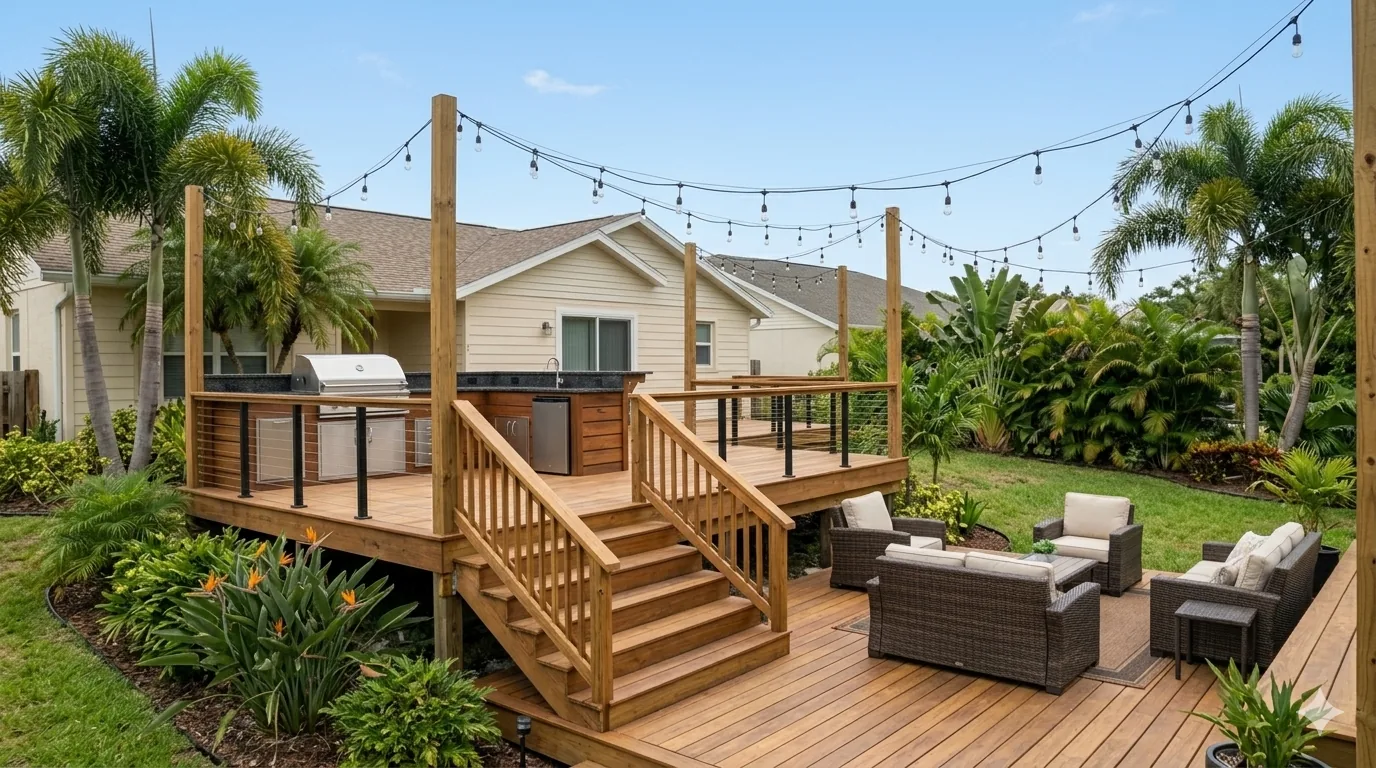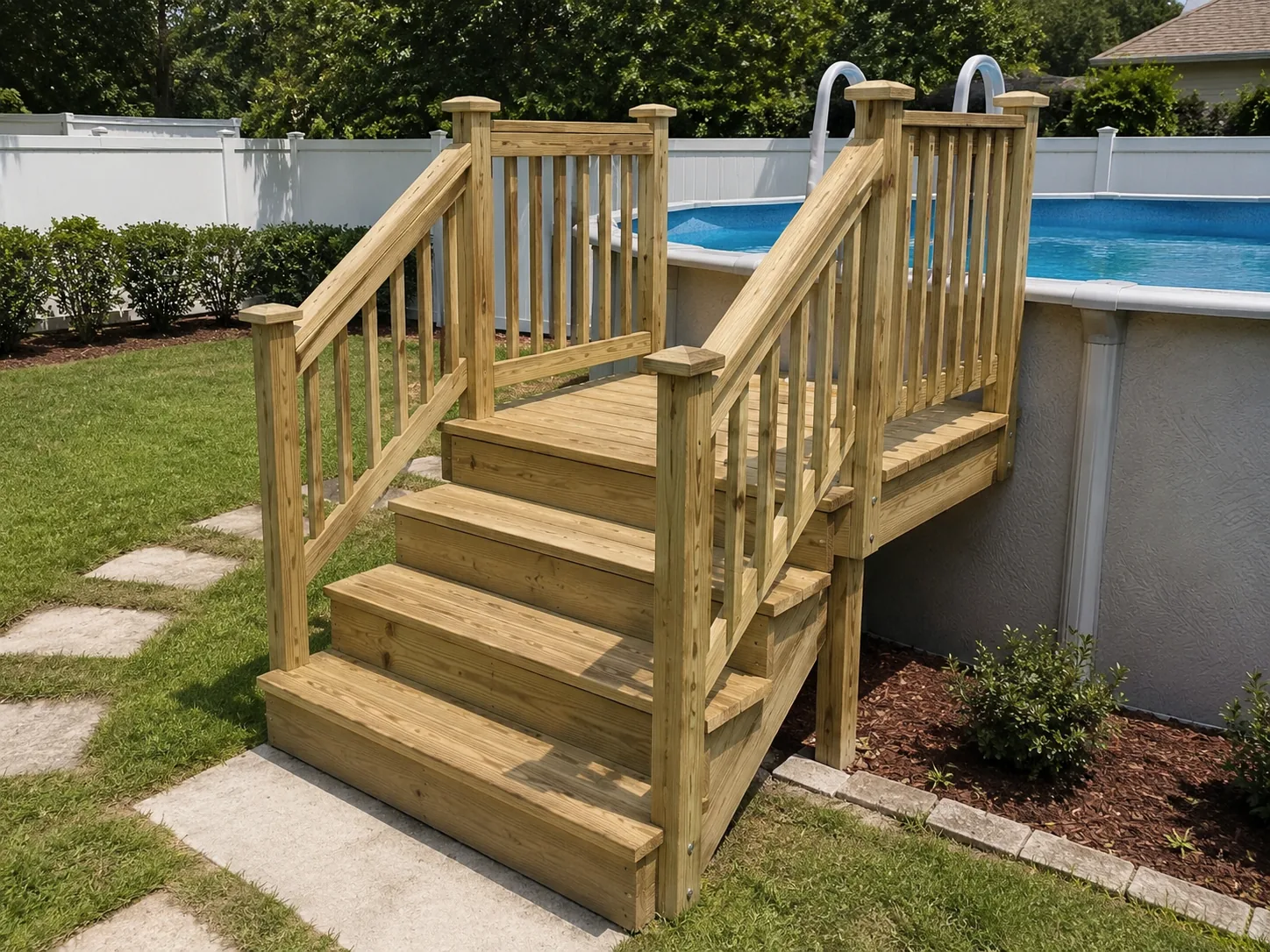
Tampa is a materials-testing lab that charges you for the experiment: 100+ days a year above 90°, near-daily summer storms, humidity that never quits, salt air near the bay, and termites underneath it all. After fifteen years of building — and repairing — decks here, this is our honest ranking of what survives.
1. Mineral-Based Composite (Deckorators Voyage, etc.)
The Florida champion. Mineral-based composite runs cooler underfoot than wood-plastic composite, doesn't absorb water at all (it floats), and carries the strongest performance in ground-contact and near-water installations. Zero rot, zero termites, near-zero fade. The catch is price — top of the composite range — and a more limited color selection than the big wood-plastic lines. Our default recommendation for pool decks and waterfront builds in places like Apollo Beach.
2. Capped Wood-Plastic Composite (Trex, TimberTech)
The mainstream winner. The polymer cap on modern boards solved the fade-and-stain problems of 2000s-era composite. No rot, no termites, no maintenance beyond soap and water, 25–50 year warranties. The honest weakness in Florida: heat. Dark colorways in full July sun genuinely exceed barefoot tolerance — choose light-to-mid tones, or plan shade. Full composite rundown here.
3. Ipe & Tropical Hardwoods
The premium natural option. Ipe is so dense it carries a Class A fire rating and shrugs off rot and insects for 30+ years. It stays cooler than composite, looks like nothing else, and ages to silver-gray if you let it. The costs: price rivaling premium composite, oiling every 1–2 years to keep the brown tone, and installation labor (every hole pre-drilled) that not every crew handles well. We love building with it for clients who love owning it.
4. Pressure-Treated Pine
The honest value play. Modern treatment resists rot and termites well, the price is unbeatable, and a properly built and maintained PT deck gives Tampa homeowners 15–20 years. The deal you're making: sealing every 1–2 years, occasional board replacement, and accepting some checking and movement as humidity cycles the wood. Where PT truly belongs even on premium builds: the framing. Nobody makes a better structural value, which is why composite surfaces ride on pressure-treated bones in most of our builds.
What We Won't Install
- Untreated softwoods — cedar and redwood perform out West; Florida humidity and termites eat them. Their rot resistance is real but calibrated for dry climates.
- Uncapped early-generation composite — still floating around discount channels; fades, stains, and grows mildew here.
- Bargain-bin PVC — premium PVC (AZEK) is excellent; cheap hollow PVC boards expand dramatically in our heat and feel flimsy underfoot.
The Part Nobody Talks About: The Frame
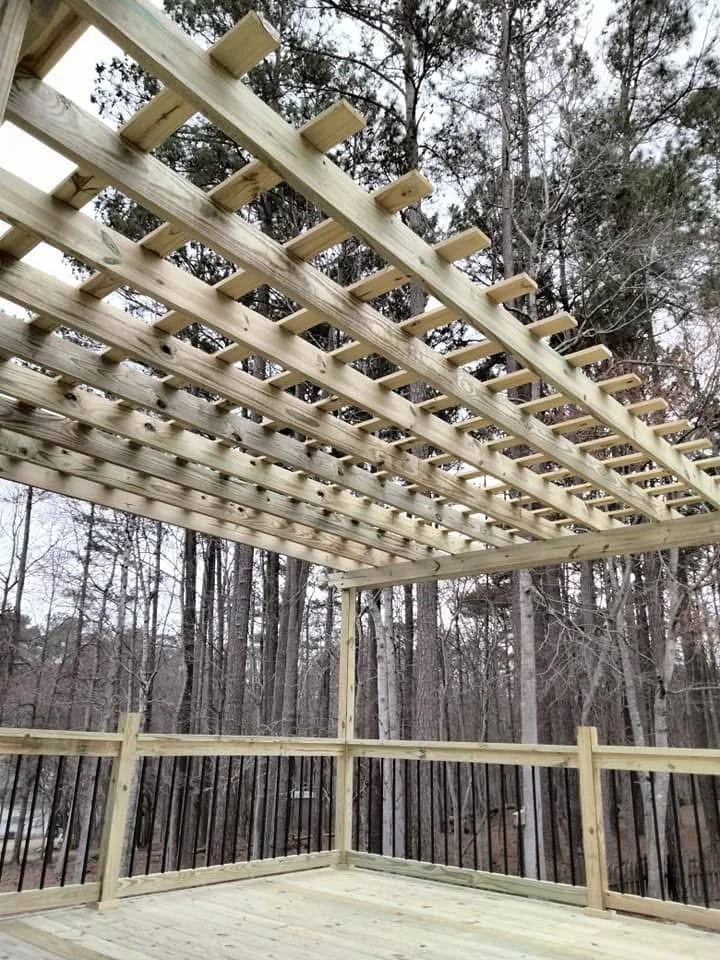
Every material above sits on a substructure, and in Florida the substructure decides the deck's lifespan more than the surface does. Ground-contact-rated framing, joist tape over every board run, coated or stainless fasteners, and real drainage clearance — that's the spec that makes a 25-year board live 25 years. A premium surface on a bargain frame is a bargain deck with expensive boards. It's also why legitimate quotes vary less on material and more on what's underneath.
Frequently Asked Questions
Mineral-based composite and light-colored boards run coolest. Ipe stays cooler than wood-plastic composite. Dark composite in full sun is the hottest common choice — avoid it for pool surrounds.
Modern capped Trex resists fade dramatically better than early-generation composite — warranties cover fade beyond a defined threshold for 25+ years. Expect minor mellowing in year one, then stability.
No — cedar's rot resistance is calibrated for dry Western climates. In Florida humidity it deteriorates fast and feeds termites. Pressure-treated pine outperforms it here at half the price.
Ground-contact-rated pressure-treated framing with joist tape and coated or stainless hardware. Near salt water, stainless fasteners are mandatory — standard hardware corrodes in a few years.