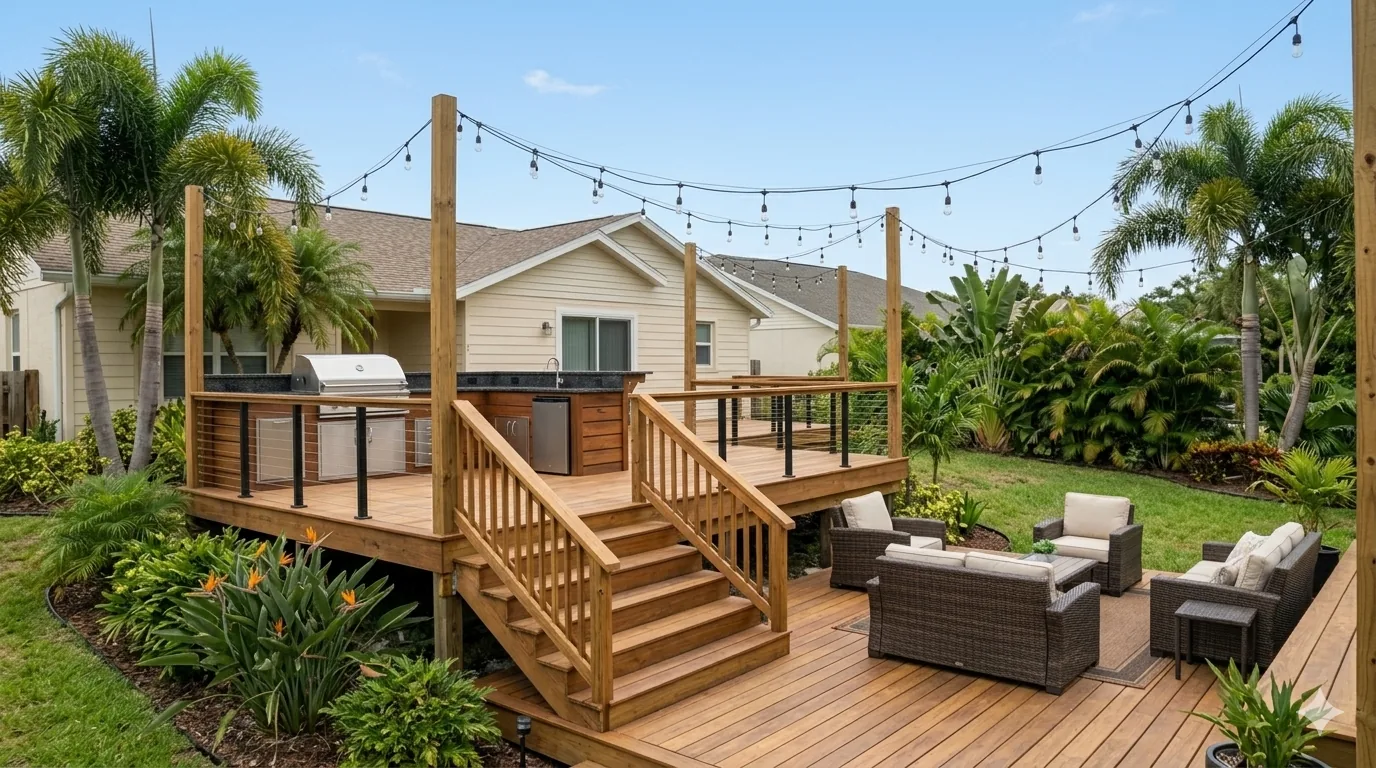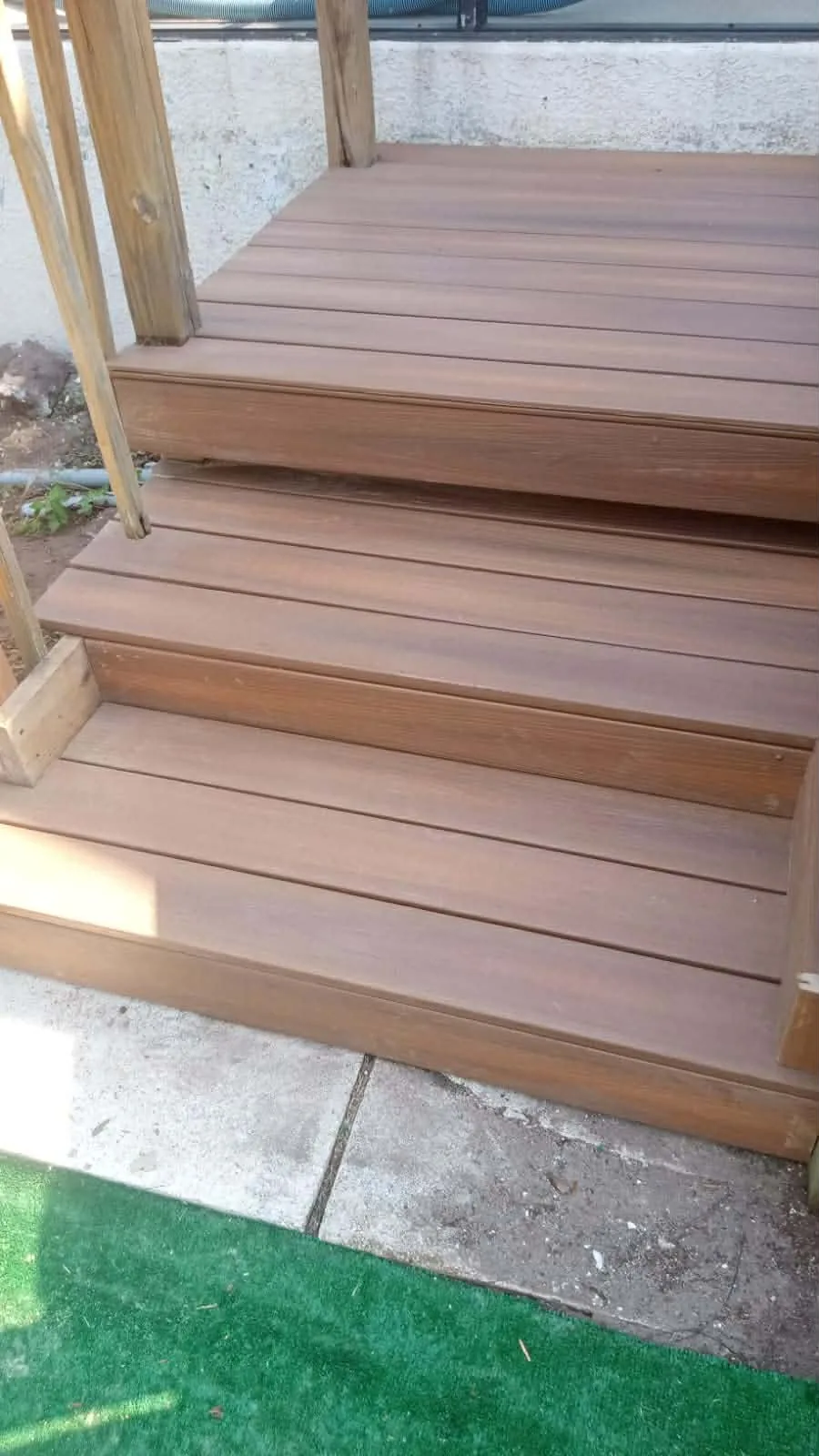
This is the decision every Tampa deck project starts with, and the honest answer is: it depends on how long you're staying and how you feel about maintenance. We install both every week. Here's the comparison we walk through at every kitchen table, with Florida-specific numbers.
The Upfront Math
Pressure-treated pine runs $35–$50 per square foot installed in the Tampa market. Composite — Trex, TimberTech, Deckorators — runs $55–$75. On a typical 300 square foot deck, that's roughly a $6,000–$8,000 gap. Wood wins round one, every time.
The Florida Climate Round
Now put both materials through a Tampa summer: 90°+ heat, daily thunderstorms, 70%+ humidity, and UV that fades car paint. This is where the gap starts closing.
What Florida Does To Wood
Humidity cycles swell and shrink boards, opening checks and cracks. UV grays the surface in a season without sealing. Daily rain feeds rot anywhere water sits, and subterranean termites — Florida's $500-million-a-year pest — treat untreated wood as an invitation. Pressure treatment and proper construction fight all of this, but the fight requires you: sealing or staining every 1–2 years, roughly $300–$600 per cycle if you DIY it, more if you hire it out.
What Florida Does To Composite
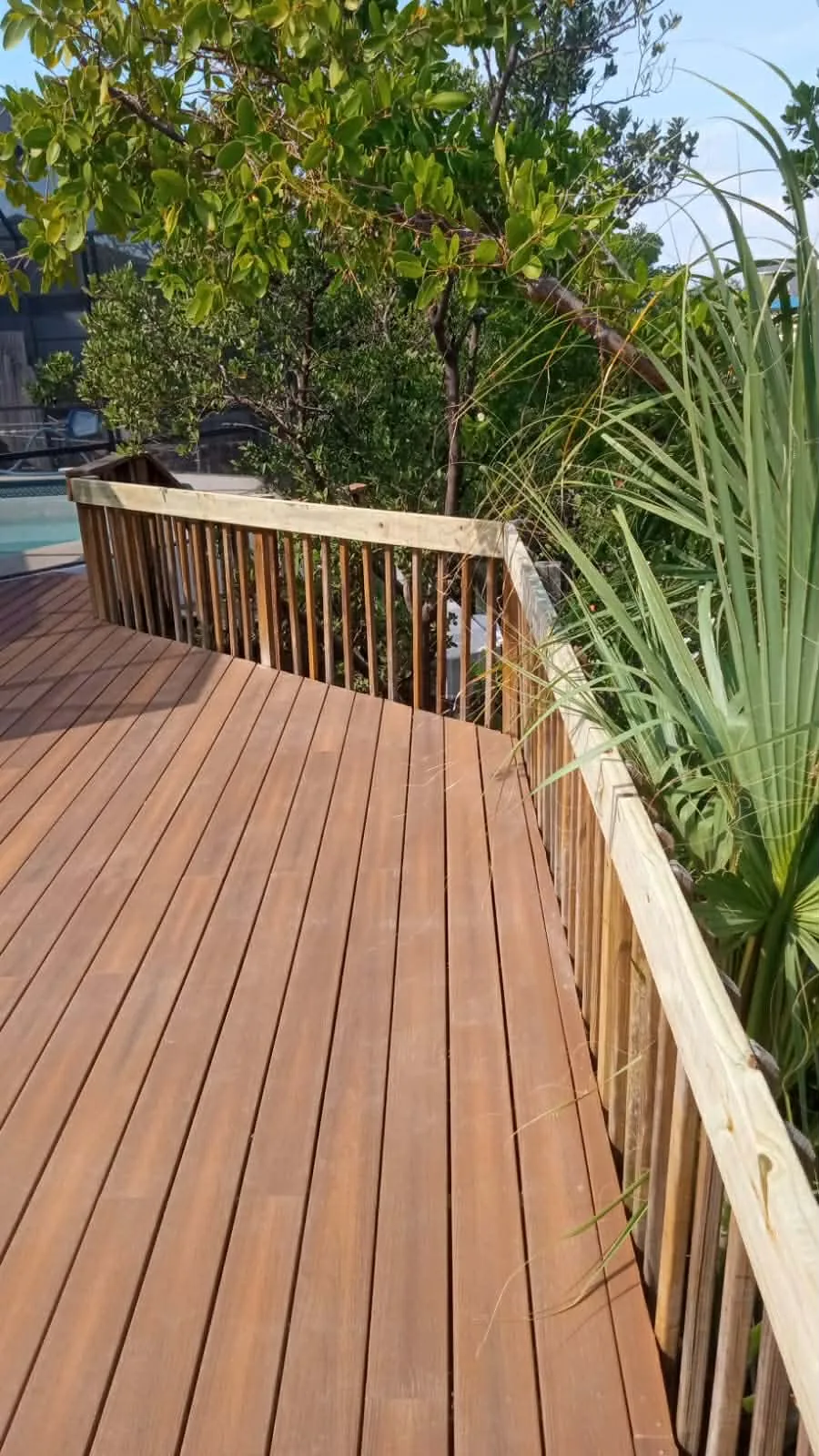
Mostly nothing. Composite doesn't rot, doesn't feed termites, doesn't splinter, and modern capped boards resist fading dramatically better than early-2000s product. The honest knock: dark composite gets hot in full sun — genuinely too hot for bare feet in July. Lighter colorways and mineral-based boards (Deckorators) mitigate it substantially, which is why we steer pool deck clients that direction.
The 10-Year Total Cost
| Pressure-Treated Wood | Composite (Mid-Tier) | |
|---|---|---|
| Install (300 sq ft) | $12,000 | $19,000 |
| Sealing (every 18 mo) | $2,800–$4,000 | $0 |
| Board/rail repairs | $800–$2,000 | $0–$300 |
| 10-year total | $15,600–$18,000 | $19,000–$19,300 |
The 10-year gap shrinks to $1,000–$3,500 — and that assumes you actually do the wood maintenance. Skip two sealing cycles in Florida and you're replacing boards early, at which point composite has won outright. Stretch to 15 years and composite wins on paper too, since the wood deck is approaching surface replacement while the composite warranty still has a decade left.
The Verdict, Honestly
- Choose wood if: budget rules, you might move within 5 years, you like the real-wood look, or you genuinely don't mind weekend maintenance.
- Choose composite if: you're staying 5+ years, you want zero maintenance, the deck surrounds a pool, or your HOA favors uniform finishes (looking at you, Westchase and Wesley Chapel).
- The hybrid play: pressure-treated framing under composite surface boards — the structure nobody sees at wood prices, the surface everybody touches in composite. It's how most of our composite decks are actually built.
Frequently Asked Questions
Dark composite in full sun runs hotter than wood. Light colorways and mineral-based boards like Deckorators narrow the gap substantially — for pool decks we spec those by default.
With proper construction and sealing every 1–2 years, expect 15–20 years of structural life. Skip the maintenance and Florida cuts that roughly in half.
If you'll own the home more than about 5 years, usually yes — the maintenance savings close most of the price gap within a decade, and the 25–50 year warranties transfer at sale.
No — composite contains no food source for termites and can't rot. The pressure-treated frame beneath it still needs proper construction details, which is why builder quality matters either way.